
This early 1900s postcard shows Milwaukee’s “Lover’s Lane.” Carl Swanson collection
An antique postcard adds a fresh perspective to a post from last year on the end of Kern Park’s “Lover’s Lane.” Read it here.
This early 1900s postcard shows Milwaukee’s “Lover’s Lane.” Carl Swanson collection
An antique postcard adds a fresh perspective to a post from last year on the end of Kern Park’s “Lover’s Lane.” Read it here.
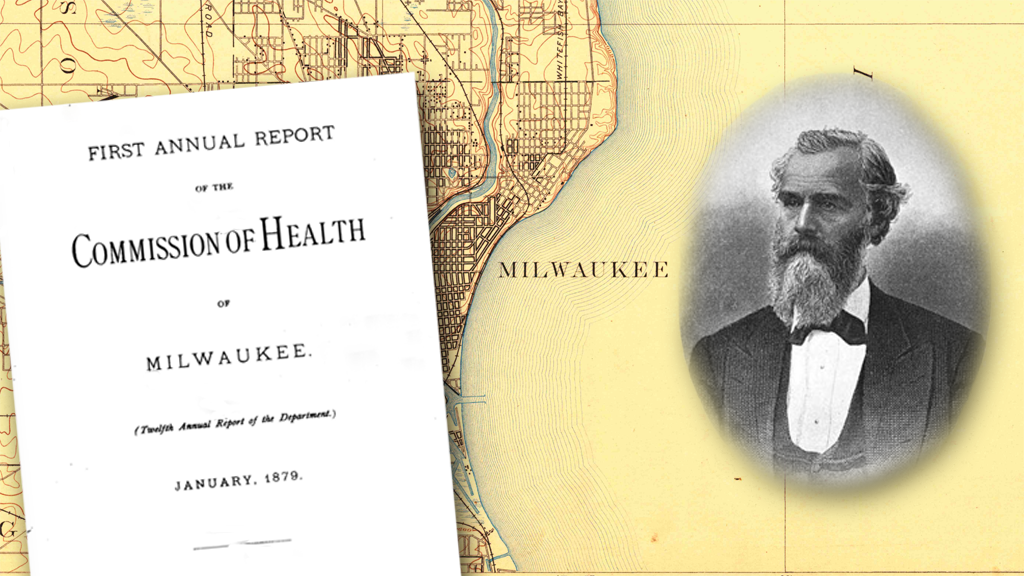
O.W. Wight served as Milwaukee’s commissioner of Health in the late 1870s, and was instrumental in sweeping reforms that greatly improved public health and welfare. Illustration by Carl Swanson
My friends at OnMilwaukee.com have very kindy reprinted a blog post on O.W. Wight, the city’s crusading Commissioner of Health in the 1870s. In addition to being a medical doctor, attorney, and world traveler, Wight was a gifted and powerful writer, as you’ll see from the quotes in the article. If you missed this entry the first time around, I hope you’ll head over to OnMilwaukee.com and take a look.
Also, Wight’s efforts to clean up Milwaukee’s ice supply are covered in a separate Milwaukee Notebook article.

The Depression-era dam across the Milwaukee River in Estabrook Park. Photo by Carl Swanson
The Milwaukee County Executive wants it gone, Milwaukee County Parks wants it gone, but the deteriorating Estabrook Park dam got a vote of confidence this week from the County Board, which voted $1.6 million in repairs. Read about the dam and its roots in a Depression-era make-work program in my latest OnMilwaukee.com article.
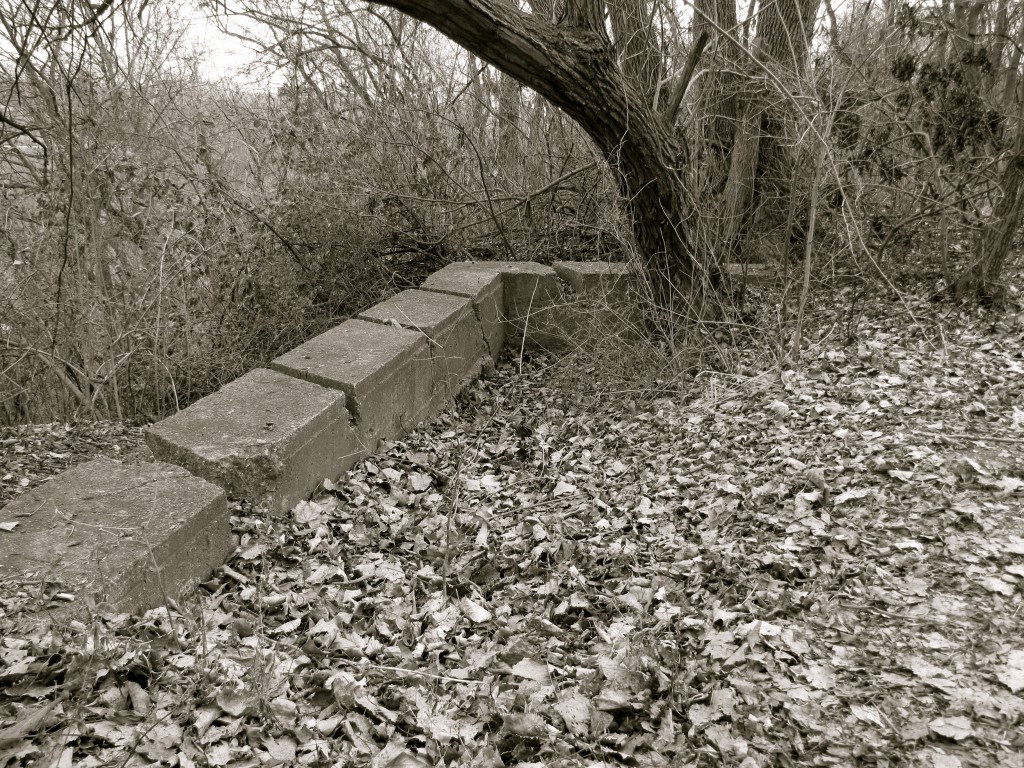
This concrete foundation, atop a river bluff south of Gordon Park, was part of the Wisconsin Lakes Ice & Cartage Company’s Center Street icehouse, destroyed in a massive fire a century ago. Carl Swanson photo
A concrete foundation in the woods south of Gordon Park in Milwaukee’s Riverwest neighborhood is all that remains of the Wisconsin Lakes Ice & Cartage Co. Center Street icehouse. The 350 x 100-foot icehouse, built in the late 1800s alongside the Chicago, Milwaukee & St. Paul RR’s “Beer Line,” was one of several icehouses on the upper Milwaukee River. The icehouse burned to the ground in a spectacular multi-alarm fire in June 1911.

This century-old partially collapsed timber dam across the Milwaukee River north of Locust Street is all that remains of the Schlitz Brewing Company’s ice-harvesting operation in Milwaukee’s Riverwest neighborhood. Carl Swanson photo
There is a fascinating reminder of Riverwest’s past hidden in plain sight in the Milwaukee River just north of the Locust Street bridge. Here logs across the river trace the remains of the Schlitz icehouse dam. The dam is over a century old, but the reason for Schlitz building its icehouses here dates back even further – all the way to late 1878 when this area was largely open country.
Nearly forgotten today, O.W. Wight served as Milwaukee’s commissioner of Health in the late 1870s, and was instrumental in launching reforms that greatly improved public health and welfare. Illustration by Carl Swanson
There has never been anyone quite like Orlando Williams Wight. Entirely self-taught (he never attended a college or university), he was a medical doctor, lawyer, theologian, engineer, author of 12 books, editor of 38 more, and – for a few extremely eventful years in the late 1870s – Milwaukee’s Commissioner of Health.
Armed with broad legal authority and an off-the-charts level of drive and focus, Wight encouraged, cajoled, argued, and, if all else failed, outright bullied business and civic leaders into sweeping public heath reforms. (more…)

The Federal government claims to own the small island in the center of this photo. The island divides the Estabrook Park dam’s gated channel (at right) and the dam’s low serpentine spillway (at left). How this man-made island became Federal property is unclear. Photo by Carl Swanson
No one can explain exactly how it happened, but the Federal government claims to own a piece of Estabrook Park.
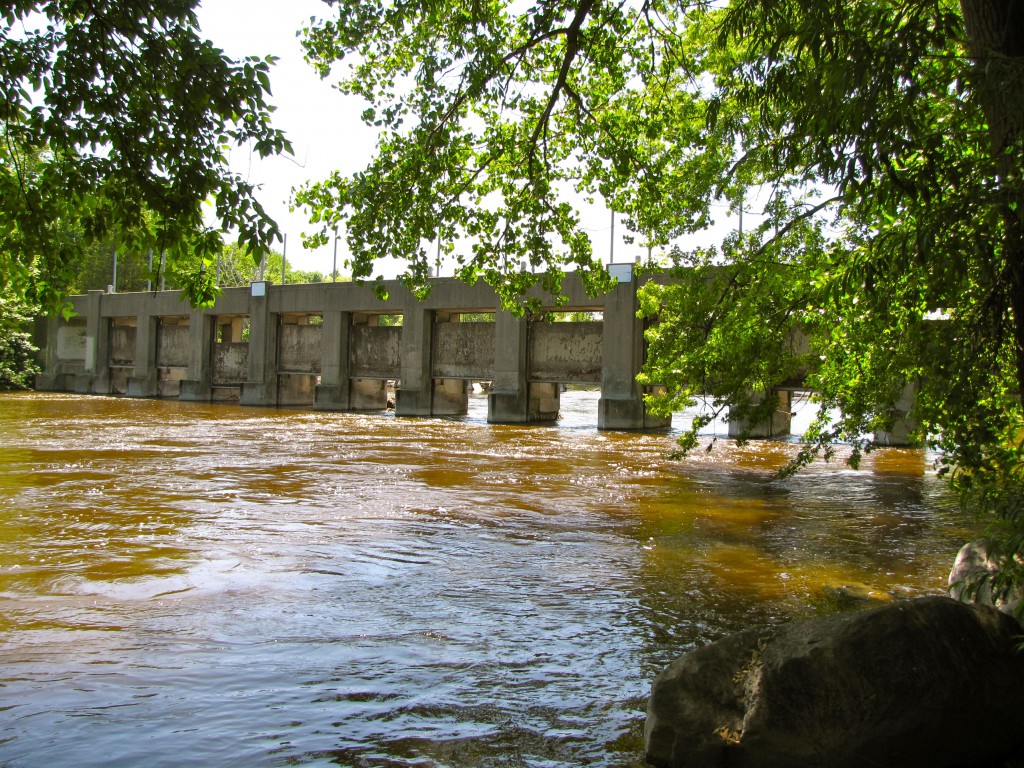
The fate of the 77-year-old Milwaukee River dam at Estabrook Park will be decided in the coming months. Photo by Rachel Swanson
After years of debate, Milwaukee County is moving closer to a decision concerning its 1937 dam across the Milwaukee River at Estabrook Park and, no matter the outcome, at least some river users are bound to be disappointed. Those who wish to see the Milwaukee River flowing unimpeded argue forcefully for its removal, while others are just as vehement in demanding a new or rebuilt dam.
In 2009, the state Department of Natural Resources, after a long, worried look at the present dam’s condition, ordered Milwaukee County to either fix it by the end of 2014 or remove the dam. The 2009 order also required the dam gates be left permanently open to alleviate stress on the structure. (more…)
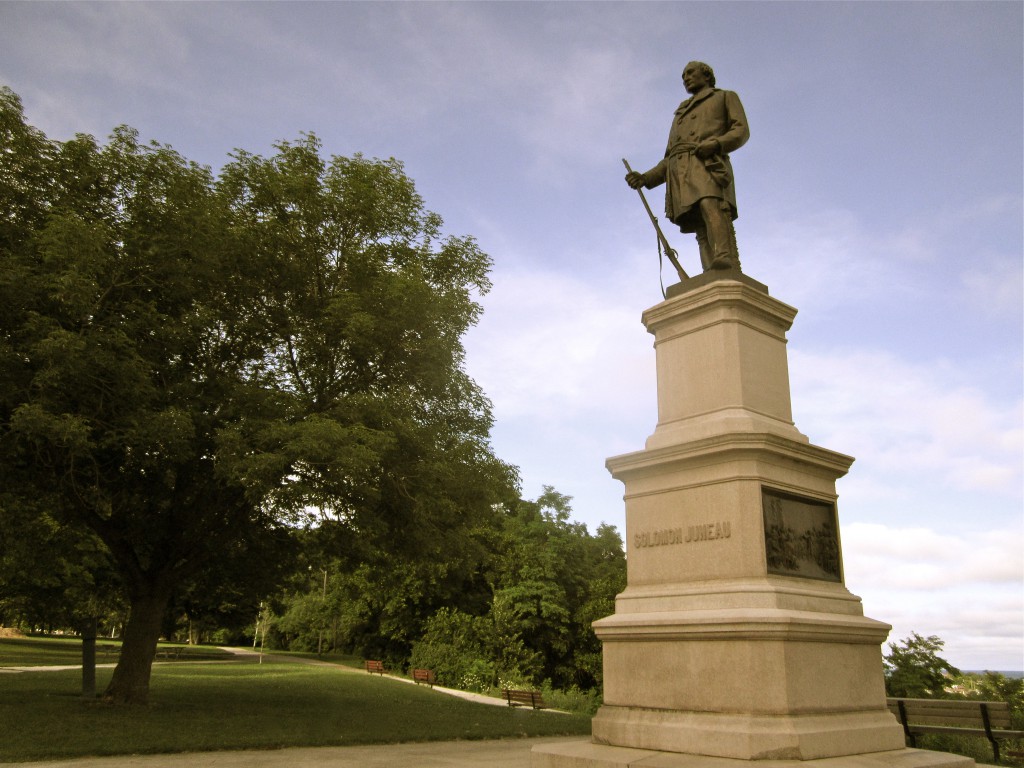
Enjoy this sample chapter from the book, Lost Milwaukee, by Carl Swanson, published by the History Press.
One recent day in Milwaukee’s Juneau Park, a strolling couple paused to look at an imposing statue. Reading the name on the pedestal, one asked, “Who’s Solomon Juneau?”
The short answer is he was a fur trader who turned a cabin in the wilderness into a thriving city. He developed the downtown and the East Side. He donated land and materials for the first courthouse. He was Milwaukee’s first postmaster, its first village president and, when the city was incorporated, its first mayor.
Juneau made a fortune and lost practically everything. He made many friends and kept them all. The pallbearers in his funeral procession included four chiefs of the Menomonee Nation.
This founder of Milwaukee was French Canadian, born near Montreal, Canada, on August 9, 1793. (He became a U.S. citizen in 1831.)
(more…)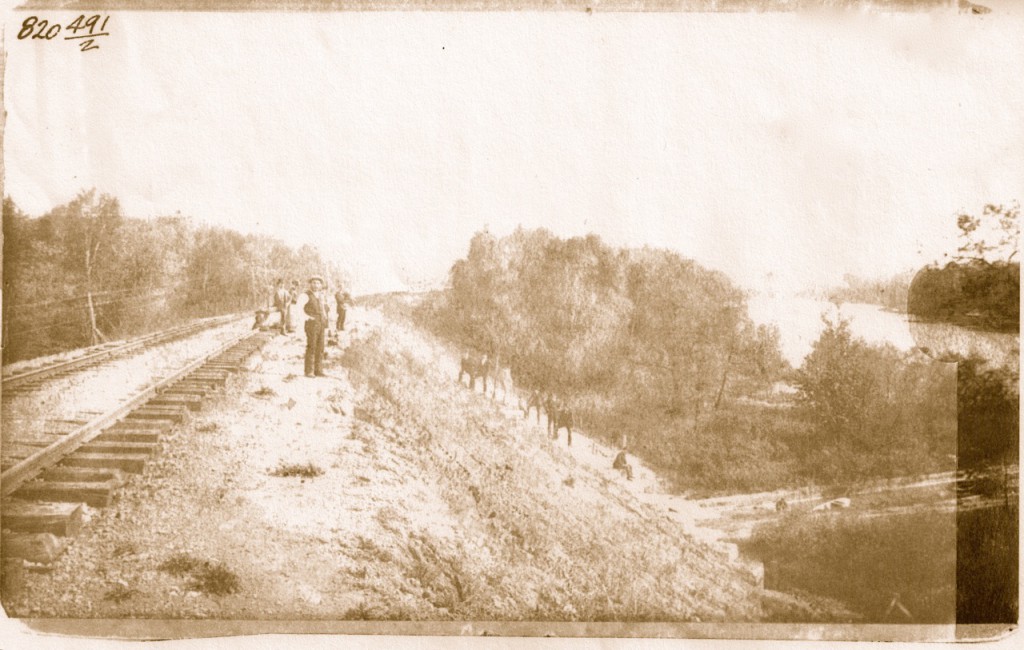
The Northwestern Union built north out of downtown in the 1880s, cutting through hills and filling in ravines as they went. This photo was taken at the location of today’s Hubbard Park in Shorewood. Courtesy Milwaukee County Historical Society
In the 1880s the Northwestern Union Ry. began building north along the east bank of the Milwaukee River. In time these tracks became part of the Chicago & North Western system and hosted some of the fastest long-distance passenger trains in the world. But before that could happen, the railroad had to resolve the great apple orchard standoff.
 Milwaukee Notebook