Five favorites for Doors Open Milwaukee

Doors Open Milwaukee was held Saturday and Sunday, September 19th and 20th. About 200 locations, many normally closed to the public, were open for visitors. Here are five of my favorite places to visit during this annual event.

1. Former Pabst Brewery

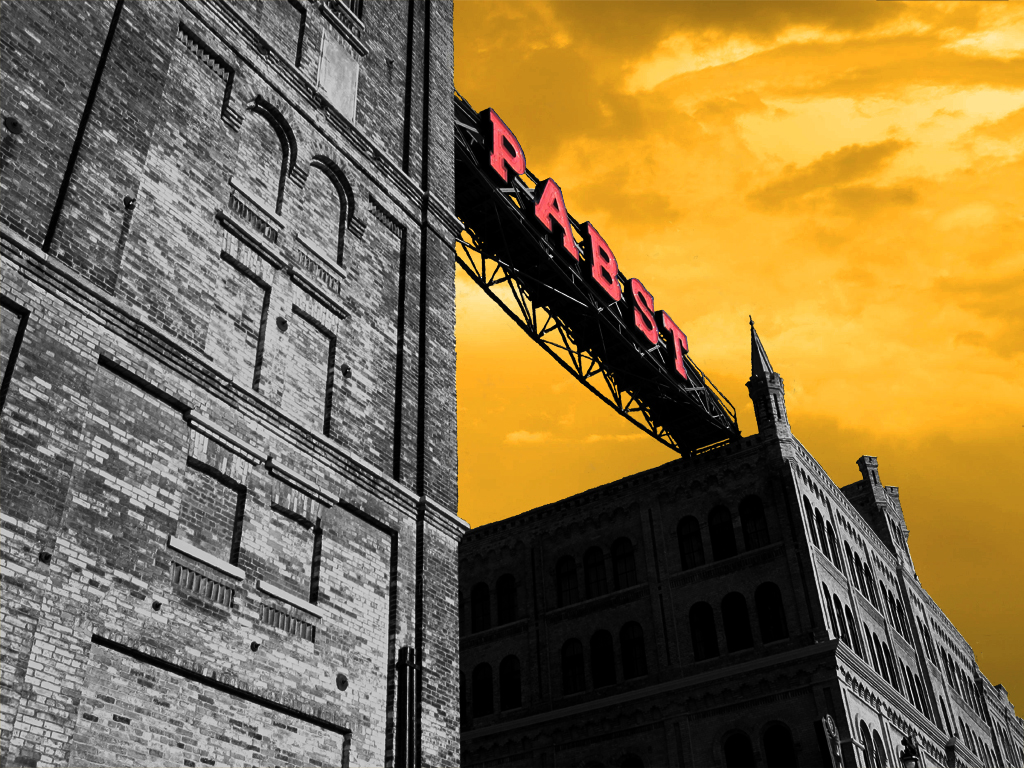
Although the area is undergoing rapid development, some of the original Pabst buildings remain. Photo illustration by Carl Swanson

Although the area is undergoing rapid redevelopment, some of the original Pabst buildings remain. Photo by Carl Swanson

Tour a speakeasy (actually, the former plant infirmary and ancient storage tunnels) at the Best Place at the Historic Pabst Brewery, 901 W. Juneau Ave. The speakeasy is open if the red jelly jar light is illuminated at the doorway marked “J.C. Haertel Real Estate & Financial Consulting.” The Pabst Brewing Co. was the subject of this Milwaukee Notebook post. (more…)

Death visits the orphanage

St. Amilianus Orphan Asylum in St. Francis

This 1907 postcard image shows St. Amilianus Orphan Asylum in St. Francis, Wis. In 1929, two young orphans died here in a mysterious poisoning. Carl Swanson collection

One morning in February 1929, four boys, residents of St. Aemilian’s Orphan Asylum in St. Francis, were sorting cabbages in the cellar of the massive building. When this chore was completed they joined 170 other residents for a lunch of beans and sauerkraut. That morning, though, they found something more appetizing – a small paper bag containing what seemed to be sweet-tasting cookie crumbs.

By the afternoon of the following day, two of the boys, Philip Giganti, 13, and Joseph Djeska, 12, were dead. The other two, Frank Novakovich, 13, and his brother Paul, 12, were desperately ill. The orphanage’s staff physician, along with another doctor called in to assist, had no difficulty establishing the cause – arsenic poisoning. (more…)

Deaf workers aided war effort

Courtesy Milwaukee County Historical Society

A supervisor communicates with a deaf ammunition inspector at the Milwaukee Ordnance Plant, a massive but short-lived World War II factory manufacturing .50-calibre machine gun cartridges. Courtesy Milwaukee County Historical Society

In 1942, at the height of the Second World War, the federal government contracted with the United States Rubber Co. to build and operate the Milwaukee Ordnance Plant, producing .50-calibre machine gun ammunition.

U.S. Rubber leased a massive factory, which formerly housed the failed Eline Candy Co. operation on North Port Washington Road, and set about converting it to ammunition production. Time was of the essence and cost was no object.

(more…)

Surprising facts about Milwaukee

Also zombie-proof. Carl Swanson photo

We can still water our lawns after a nuclear war

The North Point pumping station was built in the early 1960s with roof and walls two-feet-thick to protect the city’s vital water pumps from a nuclear blast. Arthur Rynders, superintendent of waterworks at the time, felt this was a reasonable precaution because survivors of World War III would need water to fight fires and “to wash atomic contamination into the sewers.” Source: The Milwaukee Journal, Aug. 11, 1960


(more…)

Dead moved to make way for church

St. James Episcopal Church

St. James Episcopal Church occupies an enviable site in downtown Milwaukee. Located on Wisconsin Avenue opposite the public library and the Wisconsin Club, construction of the church involved removing a pioneer cemetery. Carl Swanson photo

The spirits of Milwaukee’s early pioneers may have said, “You can build your church over my dead body.” And that’s just what the founders of St. James Episcopal Church did. The historic church at 833 W. Wisconsin Ave., is built on the former Spring Street Burial Ground, once the resting place of many of the city’s first European settlers. (more…)

High-proof whiskey

A prank played on a whiskey-loving visitor in Milwaukee's early days gave a new meaning to the term "strong drink." Illustration by Carl Swanson

A prank played on a whiskey-loving visitor in Milwaukee’s early days gave a new meaning to the term “strong drink.” Illustration by Carl Swanson

Early settler James S. Buck wrote the four-volume Pioneer History of Milwaukee [1881], which chronicled events both great and small – plus a few Buck found too funny not to share. For example, many historians recorded the construction of Milwaukee’s first courthouse, but only Buck gave us “The Courthouse Trouser Disaster.”

In the summer of 1845, John Shields, a fellow resident of the boarding house at which Buck was staying, ran afoul of the historian – and paid the price.

(more…)

A death at the Eagles Club

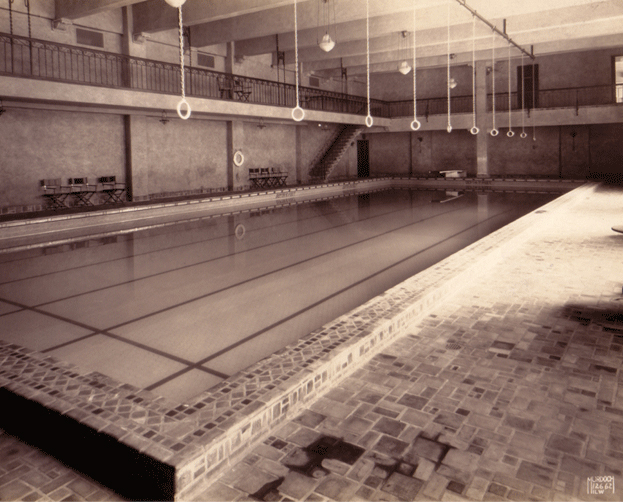
The Eagles Club 50 x 75-foot swimming pool, as it appeared shortly after the building opened in 1927. A popular music venue today, the Milwaukee Eagles Club originally combined social and athletic facilities.

The Milwaukee Eagles Club included facilities for both social and athletic functions. Its 50 x 75-foot swimming pool featured innovative “submarine lighting effects” using multi-colored underwater lights.

On the afternoon of Sept. 10, 1927, Francis Wren, age 15, dived into the swimming pool at the Milwaukee Eagles Club. More than 40 people were in the pool at the time, most of them classmates from West Division High School. No one noticed when Francis failed to resurface.

Minutes later another diver bumped into Francis’ body floating near the bottom of the pool’s 9 1/2-foot deep end. Firefighters responded and performed artificial respiration for more than a half-hour but could not revive the boy.

It was initially speculated he died as a result of a heart attack but an autopsy determined drowning to have been the cause of death. There was no sign of heart disease.

No one has ever explained how an athletic young man, known to be an expert swimmer and diver, could have drowned, unnoticed, in a pool filled with other swimmers. His death has remained a mystery for 87 years.

(more…)

The Bay View tragedy

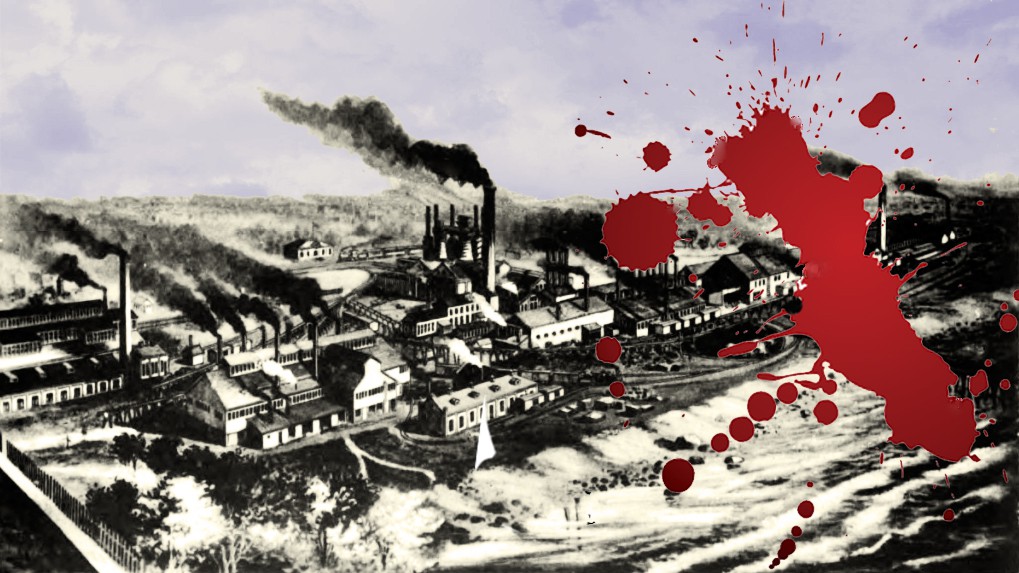
In May 1886, state militia soldiers fired on protestors during a labor dispute at the North Chicago Rolling Mill in Milwaukee's Bay View neighborhood. Carl Swanson illustration

In May 1886, state militia soldiers fired on protesters during a labor dispute at the North Chicago Rolling Mill in Milwaukee’s Bay View neighborhood. Carl Swanson illustration

Milwaukee’s first large-scale labor action started on May 1, 1886, and culminated in violence and death four days later.

The demand for an eight-hour working day was the key issue. At the time a typical work day was 10 or 12 hours and, often, six days a week. By May 3rd, 10,000 Milwaukeeans were idle, either on strike or locked out by employers who shut down in the face of escalating violence.

(more…)

The past haunts Riverside Park

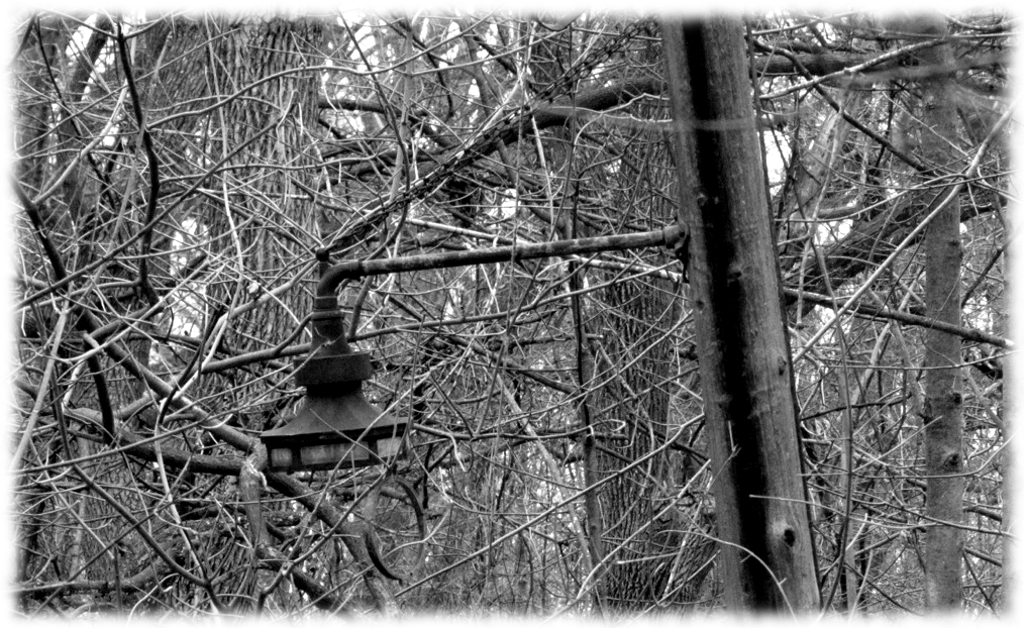
Did you know the wooded paths in Milwaukee's Riverside Park were once illuminated? Some of the ornate century-old fixtures remain in place amid the trees. Carl Swanson photo

Did you know the wooded paths in Milwaukee’s Riverside Park were once illuminated? Some of the ornate century-old fixtures remain in place amid the trees. Carl Swanson photo

Once a natural ravine sloped down from Oakland Avenue to the Milwaukee River. In the 1890s, Frederick Law Olmstead’s famous landscape design firm used the ravine as the centerpiece of the future Riverside Park. The ravine is gone, but many aspects of the original park’s design remain – if you know where to look.

(more…)

Get ready for Milwaukee Day!

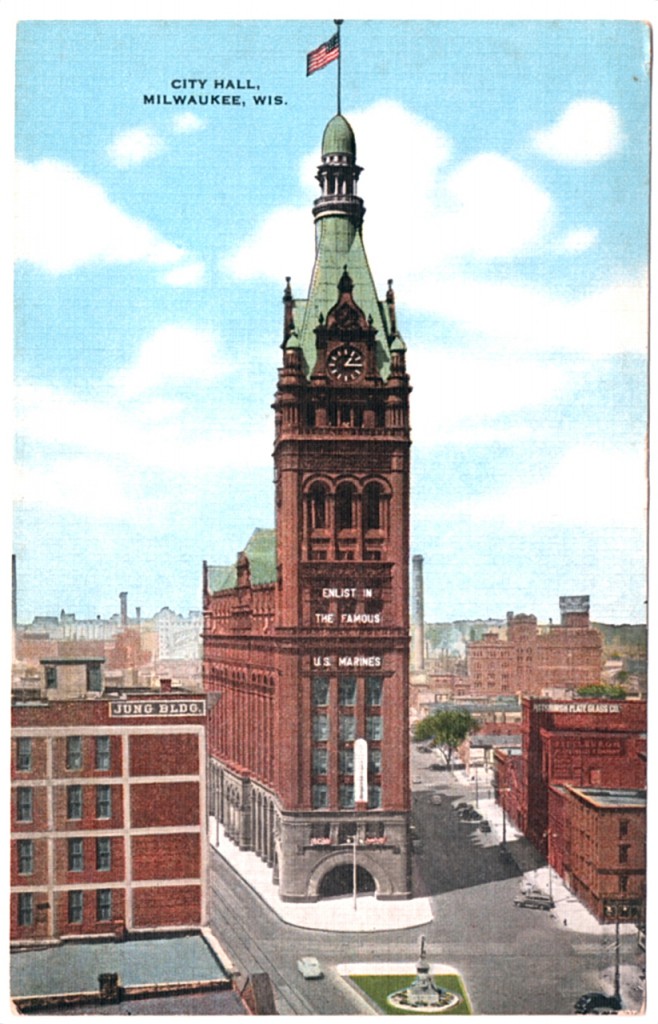
Milwaukee City Hall postcard

Milwaukee’s City Hall, a civic landmark since 1895. The bell tower is 353 feet tall. Carl Swanson collection

Tomorrow is 4/14, also known as Milwaukee Day after the city’s 414 telephone area code. You can read up on all the day’s special events here. The activities range from a giant happy hour to the ringing of the City Hall bell.

So rarely is the bell heard that few people know it exists. But in the days when it regularly tolled the City Hall bell could be heard in Thiensville, 30 miles away.

The bell is eight feet tall, eight feet, eight inches in diameter – the largest in the U.S. at the time of its casting – and bears this verse by Henry Baumgartner, then 10th Ward alderman:

“When I toll the hour of the day
From this grand and lofty steeple,
Deem it a reminder, pray,
To be honest with the people.”

Cast in bronze and weighing 10 tons, the bell was hoisted into position in 1896 by four men turing a capstan winding a rope around a cylinder. It took 16 hours to raise the bell to its perch, 200 feet above street level.

The bell sounded every hour and quarter-hour until October 1925, when it became apparent its vibrations were weakening the tower and threatening to return the bell to ground level a lot faster than it went up. Mayor Daniel Hoan ordered it silenced, saying, “No doubt both the hides and skulls of public officials are thick enough to immunize us all from danger, but we must protect the general public.”

It has rung only infrequently since.

In 1909, the bell, originally known as “Big Ben,” was officially rechristened “Solomon Juneau.” To get in the 414 mood, take a moment to read about the real Solomon Juneau, the big-hearted French-Canadian fur trader who founded our city with considerable help from his remarkable wife, Josette.

Carl_sigMKE_share